
ReFarm Project

HOF TOLLE

Resilience through diversity
Calden-Fürstenwald · Germany

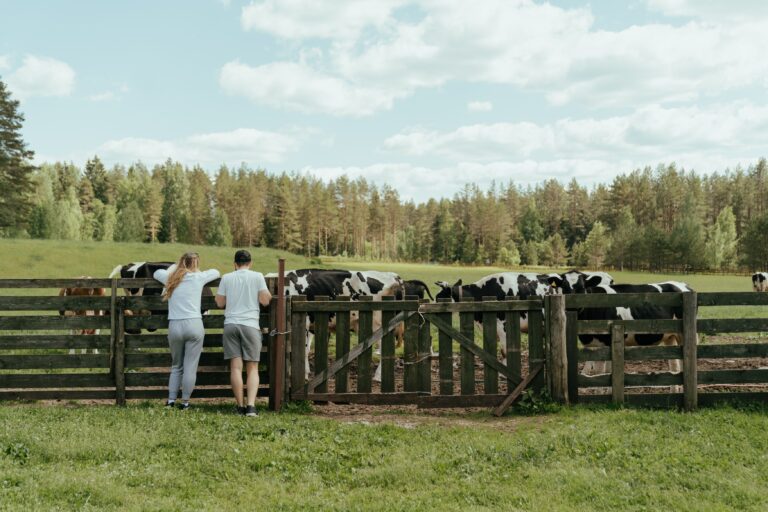
Hof Tolle is a diversified farm in Calden-Fürstenwald near Kassel, combining arable farming and cattle with market gardening, horse husbandry and direct marketing. Across its different production branches, the farm brings together food production, biodiversity and a broad range of activities that contribute to the resilience of the farm as a whole.

However, Hof Tolle is more than a production site. Farm tours, workshops, educational activities and research projects make it a place for practical learning and experimentation. This combination of agricultural diversity, knowledge exchange and openness to new approaches makes Hof Tolle an ideal setting for exploring how Nature-Based Solutions can become part of a resilient and economically viable farm system.

Farm at a Glance
Location

Calden-Fürstenwald, Germany

Farm Size

60 ha

Farming System

Diversified mixed farming

Production

Arable crops, cattle & market gardening

Conditions

Low upland region, ~750 mm precipitation/year

Focus

Whole-farm resilience & diversification
More Than a Working Farm

Alongside agricultural production, Hof Tolle combines diversification, learning and experimentation, making the farm a place where practical farming and new approaches to resilience can develop side by side.

DIVERSIFIED FARMING

Hof Tolle combines different agricultural enterprises and activities within one farm system, creating multiple connections between production, land management and farm development.

LEARNING & EXCHANGE

Through farm tours, workshops and educational activities, Hof Tolle creates opportunities to share practical farming experience and explore sustainable approaches together with different target groups.
RESEARCH & INNOVATION

The farm participates in research and innovation activities that connect practical farming with experimentation and the development of new approaches to greater resilience.
Farming in Practice

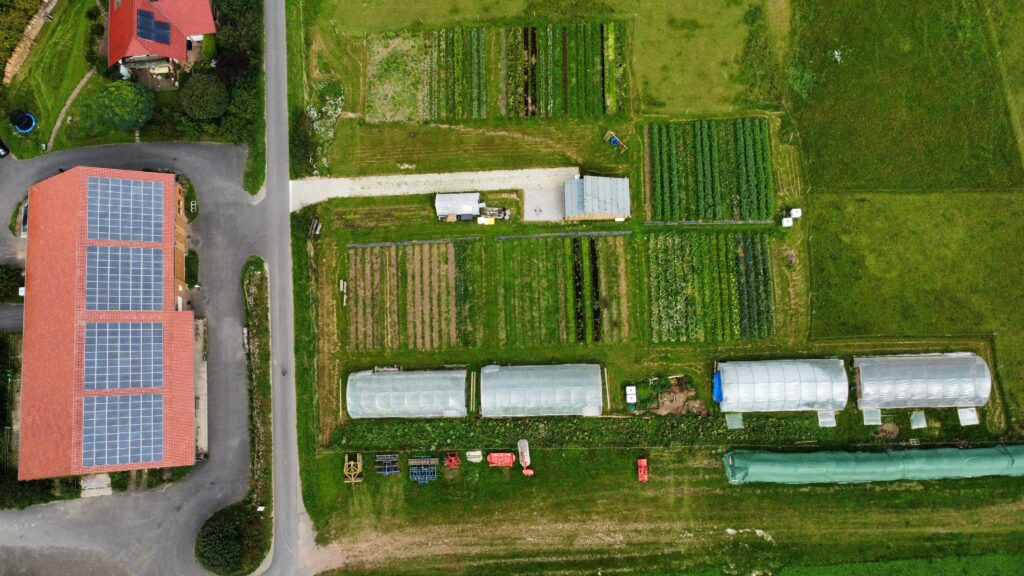
Hof Tolle brings together several agricultural activities within one diversified farm system. Arable farming and cattle are complemented by market gardening, horse husbandry and direct marketing, creating a farm where different forms of production and land use exist side by side.

Arable Farming & Livestock

Arable farming and cattle form an important part of Hof Tolle's agricultural production. The combination of crop and livestock farming creates connections between different parts of the farm and contributes to its diversified character.
Market Gardening

Vegetable production adds another dimension to the farm's diverse production system. At the same time, it is particularly exposed to climatic pressures such as summer drought, heavy rainfall and strong winds, making it an important area for exploring greater resilience.
Farm Diversification

Hof Tolle extends beyond primary agricultural production through activities such as direct marketing, farm-based learning and other complementary offers. These different activities help broaden the farm's economic base while creating opportunities to connect agriculture with visitors, consumers and learners.

Challenges for a Resilient Future

Hof Tolle’s diversified farming system is increasingly exposed to changing weather conditions. Summer drought, periods of heavy rainfall and strong winds can affect both field crops and vegetable production, creating different pressures across the farm. Strengthening resilience therefore means finding ways to protect crops, manage water more effectively and create more stable growing conditions.

CLIMATE EXTREMES

Periods of summer drought and increasingly intense rainfall create contrasting challenges for crop production, requiring the farm to cope with both too little and too much water.

WATER MANAGEMENT

Reliable access to water is particularly important for vegetable production. Capturing and making better use of rainfall can help reduce vulnerability during dry periods.

WIND EXPOSURE

Strong winds can damage vegetable crops and contribute to less favourable growing conditions. Creating greater protection around production areas can help reduce losses and improve the local microclimate.

Together, these pressures make crop protection, effective water use and stronger ecological structures important elements in building resilience across Hof Tolle’s diverse farming system. Rather than addressing these challenges individually, the farm is exploring complementary measures that can strengthen different parts of the farming system while also supporting its ecological and economic development.

For Hof Tolle, resilience means combining practical adaptation with the diversity that already defines the farm.

ReFarm Focus
From challenges to farm-specific solutions

Based on the farm’s individual conditions and resilience challenges, ReFarm explores a combination of measures designed to improve water management, protect vulnerable soils and strengthen the agricultural landscape.

Hof Tolle’s ReFarm approach combines measures across the farming system rather than focusing on a single production branch. The selected solutions address wind exposure, water availability, soil resilience and biodiversity, while also exploring how ecological improvements can be connected to the farm’s wider economic development.

Windbreak Hedgerow & Edible Shelterbelt

IMPLEMENTED
Protecting crops while creating new value
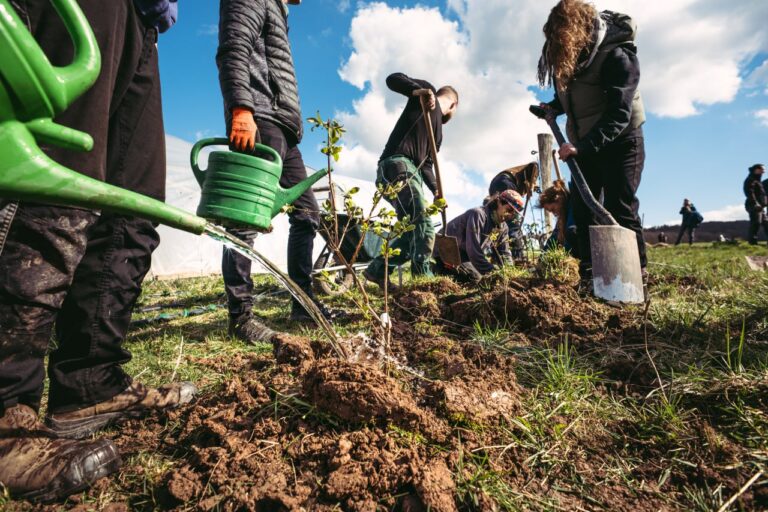
A multifunctional shelterbelt is being established along the south-western side of the market garden, where strong winds regularly cause crop damage and increase evapotranspiration. The planting combines 71 woody plants, including berry shrubs, serviceberries, rock pears and pear trees, creating a permeable barrier that reduces wind exposure without causing excessive turbulence.

Beyond protecting vegetables, the shelterbelt creates habitat for pollinators and beneficial insects and produces additional fruit that can be used in the farm’s vegetable boxes and seasonal café.

EXPECTED BENEFITS

Wind protection · Improved microclimate · Biodiversity · Additional produce

Biochar

PLANNED

Strengthening soils for more variable conditions
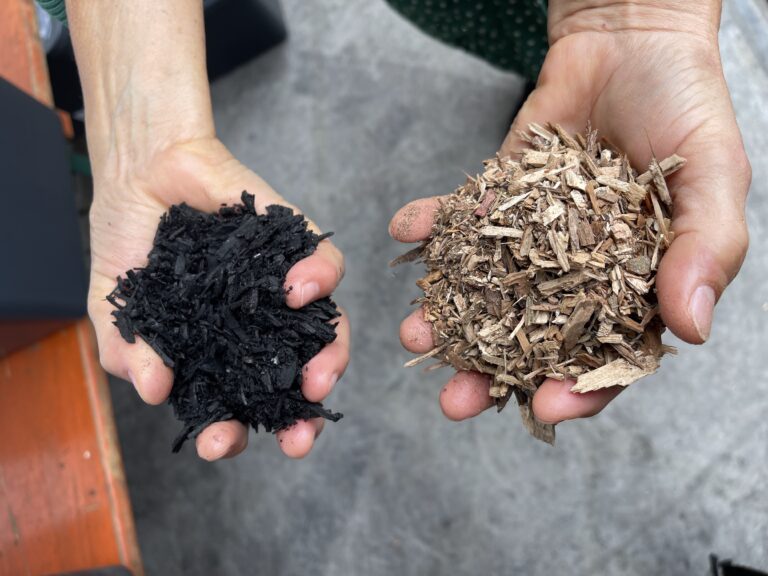
Hof Tolle plans to test biochar within its mixed crop-livestock system by incorporating it into cattle manure or slurry before applying it to arable land. A long-term field trial will explore its effects on soil structure, water-holding capacity, nutrient retention, soil biological activity and carbon storage.

Because the farm already has relatively carbon-rich loamy soils, the focus is not simply on storing additional carbon. Instead, the trial will examine whether biochar can improve drought resilience and nutrient efficiency under increasingly variable weather conditions before considering implementation at a larger scale.

EXPECTED BENEFITS

Water retention · Soil structure · Nutrient efficiency · Drought resilience

Rainwater Harvesting

PLANNED

Making better use of available water
Water availability is becoming an increasing challenge, particularly for Hof Tolle’s vegetable production. The farm therefore plans to expand its rainwater harvesting capacity to provide greater irrigation security during prolonged dry periods and reduce dependence on external water sources.

The concept goes beyond conventional storage: an enclosed reservoir is intended to be combined with a natural water reservoir, supporting both rainwater filtration and biodiversity. Existing infrastructure, including the historic Altes Wasserhaus, is also being considered as part of the system.

EXPECTED BENEFITS

Irrigation security · Water efficiency · Drought resilience · Biodiversity

Biodiversity & Agrotourism

PLANNED

Connecting ecological resilience with farm diversification
One particularly innovative part of Hof Tolle’s concept links the implementation of Nature-Based Solutions with the farm’s business model. In cooperation with a regional tourism partner, the farm plans to develop agrotourism using mobile accommodation units, with additional income helping to finance biodiversity-enhancing measures around the farm.

These measures can include additional trees and hedgerows, façade greening, deadwood habitats and other habitat structures. At the same time, the resulting greener farm environment can increase the attractiveness of the site for visitors – creating a feedback loop between ecological improvement and economic diversification.

EXPECTED BENEFITS

Biodiversity · Cooling & habitat creation · Landscape quality · Diversified income

From Plan to Practice

Nature-Based Solutions take different paths from idea to implementation. Each ReFarm Lighthouse Farm starts from its own conditions, experiences and stage of development. By following one selected measure in more detail, we can see how farm-specific solutions move into practice and continue to develop through experience, adaptation and monitoring.

WIND PROTECTION IN PRACTICE

At Hof Tolle, wind protection provides a concrete example of how a climate challenge can be translated into a multifunctional Nature-Based Solution. A shelterbelt around the market garden combines crop protection with fruit production and new habitat structures – creating benefits that will continue to develop as the planting matures.

01

RESPONDING TO THE SITE
Designing for a specific challenge

Strong south-westerly winds regularly affect Hof Tolle’s market garden, causing mechanical damage to vegetables, increasing evapotranspiration and reducing marketable yields. The shelterbelt was therefore designed specifically for this exposed side of the production area, turning an identified climate risk into a targeted intervention.

Strong south-westerly winds · ~5% annual crop loss from wind damage

02

ESTABLISHING THE SHELTERBELT
Combining protection and production

The shelterbelt consists of 71 woody plants at different heights: 51 Haskap shrubs, 12 alder-leaved serviceberries, five rock pears and three pear trees. Together, they form a permeable barrier designed to slow the wind without creating excessive turbulence, while also producing fruit and providing habitat for pollinators and beneficial insects.

71 woody plants · Four complementary planting types

03

GROWING INTO ITS ROLE
Benefits that develop over time

The protective effect of the shelterbelt will increase as the shrubs and trees become established. Because substantial effects on wind speed and crop damage are not expected immediately, short-term monitoring focuses on plant establishment and annual growth, with average shrub growth of around 15 cm per year set as a target.

Target: ~15 cm average shrub growth per year

04

MEASURING LONG-TERM IMPACT
From establishment to greater resilience

As the shelterbelt matures, monitoring will shift towards its actual effects on the market garden. Hof Tolle plans to assess wind speeds and vegetable damage, with the long-term aim of reducing annual crop losses caused by wind from approximately 5% to 2%. Biodiversity observations will complement this assessment and help capture the wider ecological effects of the measure.

Long-term target: wind-related crop losses ~5% → 2%
Monitoring & Learning

Implementing Nature-Based Solutions is only part of the process. Monitoring helps Hof Tolle understand how the selected measures develop over time, assess whether they deliver the intended benefits and identify where further adaptation may be needed. The approach combines simple field-based observations with measurable indicators, keeping monitoring closely connected to everyday farming practice.

Depending on the measure, this includes tracking wind damage and plant growth, soil structure and water retention, rainwater availability and use, as well as biodiversity and changes around the farm environment. Comparing conditions over time – and, where possible, treated and untreated areas – will help build a practical picture of how the different solutions contribute to farm resilience.

Crop Protection
Soil
Water Use
Biodiversity
Learning Beyond the Farm
From local experience to shared knowledge

As a ReFarm Lighthouse Farm, Hof Tolle connects practical experimentation with learning and knowledge exchange. Its diverse farming system provides a real-world setting for exploring how Nature-Based Solutions can respond to different challenges while remaining compatible with the everyday realities of a working farm.

Through farm tours, workshops, seminars, research activities and collaboration with agricultural practitioners and organisations, experiences from the farm can be shared beyond Hof Tolle itself. In this way, practical lessons from implementation contribute to wider learning about resilient farming and help demonstrate how Nature-Based Solutions can be adapted to different agricultural contexts.