
ReFarm Project

EKOFARMA PROBIO

Building resilience into the landscape
Velké Hostěrádky · Czech Republic

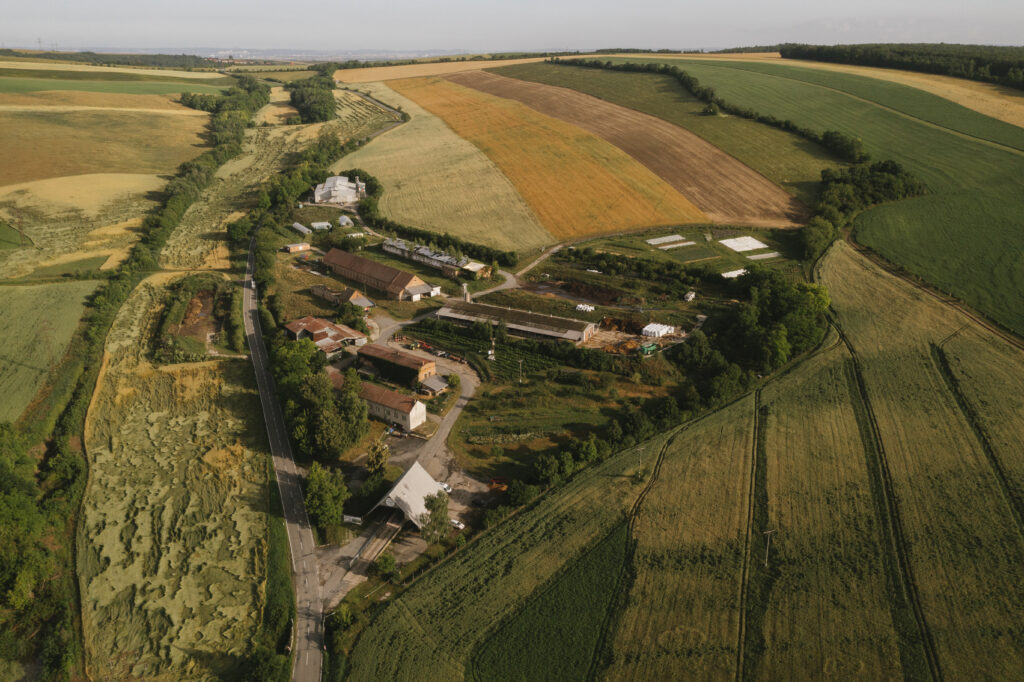
EKOFARMA PROBIO is a 410-hectare organic farm in Velké Hostěrádky, South Moravia, combining crop and livestock production with research, demonstration and practical knowledge transfer. Located in one of the Czech Republic’s more climate-exposed agricultural regions, the farm faces recurrent drought, limited water availability and a high risk of erosion during intense rainfall.

Beyond agricultural production, EKOFARMA PROBIO has developed into an important demonstration and innovation site. The farm regularly hosts field days, workshops and educational activities and participates in national and international projects focusing on organic farming, biodiversity, climate resilience and sustainable land management. This combination of everyday farming, experimentation and knowledge exchange makes it an ideal Lighthouse Farm for ReFarm.

Farm at a Glance
Location

South Moravia, Czech Republic

Farm Size

410 ha

Farming System

Organic farming

Production

Arable crops & livestock

Conditions

Dry region, 500–600 mm precipitation/year

Focus

Landscape resilience, soil & water
More Than a Working Farm

Alongside agricultural production, EKOFARMA PROBIO serves as a place for demonstration, experimentation and knowledge exchange, connecting everyday farming practice with innovation and learning.

ORGANIC FARMING

EKOFARMA PROBIO has been farming organically since 2008, with a strong focus on soil fertility and resilient agricultural systems.
DEMONSTRATION & INNOVATION

Since 2018, the farm has served as an official demonstration farm of the Czech Ministry of Agriculture and contributes to national and international research and innovation projects.
LIVING LAB & KNOWLEDGE EXCHANGE

As part of the first ENoLL-certified Living Lab in the Czech Republic, the farm connects practical experimentation with knowledge transfer for farmers, advisors and other stakeholders.
Farming in Practice

EKOFARMA PROBIO combines arable and livestock production within an organic mixed-farming system. Crop rotation, soil fertility and the integration of animals and crops play an important role in creating a productive system that can respond to the challenging conditions of South Moravia.

Arable Farming

Organic cereals, legumes, forage and other field crops form the core of the farm’s production. Crop rotation and soil fertility management support resilient production under increasingly dry conditions.

Livestock Integration

Organic pig farming and sheep grazing complement crop production. Integrating livestock into the farming system supports nutrient cycling and contributes to the farm’s overall sustainability.

Resilient Land Management

Production is closely connected to sustainable land management, with the farm exploring approaches that strengthen soil health, biodiversity and resilience to drought and erosion. Its wider landscape perspective also extends beyond individual fields through cooperation with other farmers in the area.

Challenges for a Resilient Future

Farming in South Moravia increasingly means adapting to extremes. EKOFARMA PROBIO operates in a hilly agricultural landscape where prolonged drought and limited water availability can put crops under considerable stress. At the same time, intense rainfall events create runoff and erosion risks, particularly on sloping fields.

DROUGHT

Prolonged dry periods increasingly put crops and soils under stress and affect the reliability of agricultural production.

WATER SCARCITY

Limited water availability makes retaining and distributing rainfall more effectively across the farm an important priority.

EROSION

The farm’s hilly landscape is particularly vulnerable to runoff and soil loss during intense rainfall events.

These interconnected challenges make water retention, soil protection and landscape-level resilience key priorities for the farm. The aim is not simply to respond to individual weather events, but to create a farming landscape that can retain and distribute water more effectively while protecting vulnerable soils.

For EKOFARMA PROBIO, building resilience starts with keeping water in the landscape and protecting the soil it depends on.

ReFarm Focus
From challenges to farm-specific solutions

Based on the farm’s individual conditions and resilience challenges, ReFarm explores a combination of measures designed to improve water management, protect vulnerable soils and strengthen the agricultural landscape.

At EKOFARMA PROBIO, the focus lies on agroforestry, strip cropping and keyline design, complementary approaches that address resilience at both field and landscape level.

Agroforestry

IMPLEMENTED & DEVELOPING​

Integrating trees into the agricultural landscape
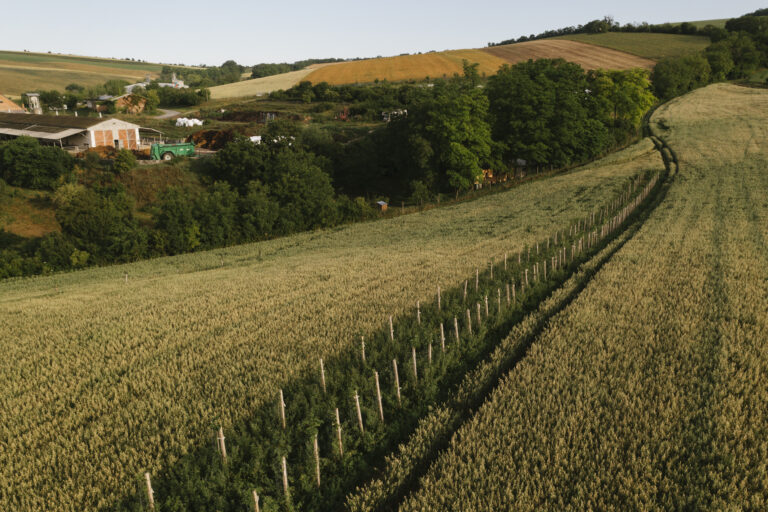
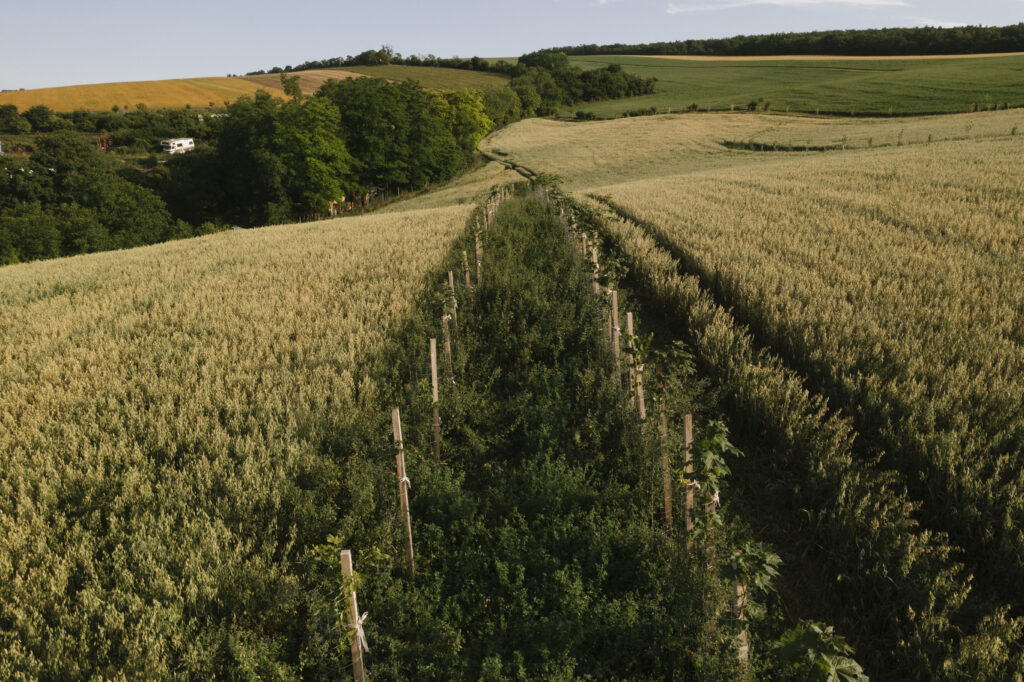
EKOFARMA PROBIO established an 8.78-hectare agroforestry system in 2024, integrating 866 trees and 65 shrubs into arable land. The system combines agricultural production with woody vegetation to create a more diverse and resilient landscape. Further expansion of agroforestry is planned across approximately 30 additional hectares.

Agroforestry can help improve the farm’s microclimate, increase water retention and reduce vulnerability to drought and erosion, while simultaneously creating habitats and supporting biodiversity.

EXPECTED BENEFITS

Water retention · Microclimate · Soil protection · Biodiversity

Strip Cropping

PLANNED

Breaking up large fields to protect soil and water
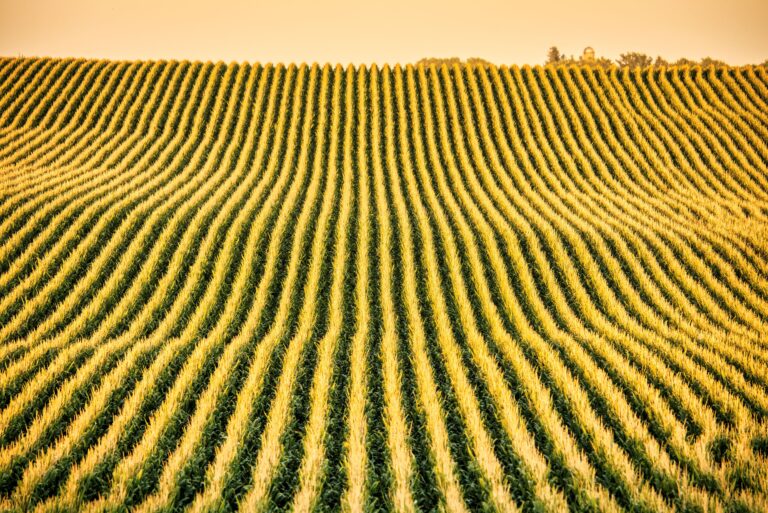
Strip cropping divides larger arable fields into smaller, alternating crop strips. At EKOFARMA PROBIO, the approach is being considered as a way to interrupt long slopes and reduce the speed at which water moves across the landscape.

By creating greater spatial diversity within fields, strip cropping can help reduce surface runoff and erosion, while supporting a more varied and resilient cropping system.

EXPECTED BENEFITS

Erosion control · Reduced runoff · Crop diversity · Landscape resilience

Keyline Design

PLANNED

Working with the natural movement of water
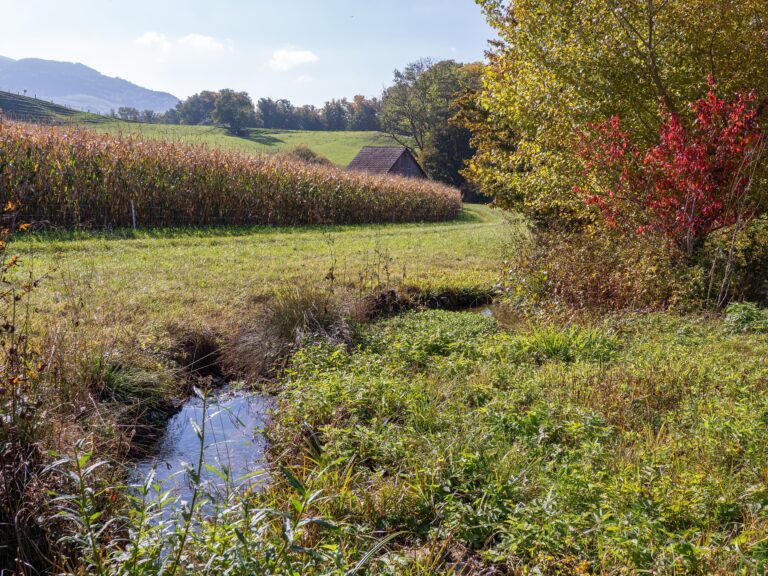
Keyline design uses topography and natural water flows to guide how water is managed across agricultural land. At EKOFARMA PROBIO, slopes, runoff-prone areas and visible drought stress will be analysed to identify where water movement can be slowed, spread and retained more effectively.

The resulting water-retention concept will help prioritise interventions on vulnerable fields, with the aim of improving moisture distribution, reducing runoff and erosion, and supporting more stable crop development during dry periods.

EXPECTED BENEFITS

Water infiltration · Moisture distribution · Erosion control · Drought resilience

From Plan to Practice

Nature-Based Solutions take different paths from idea to implementation. Each ReFarm Lighthouse Farm starts from its own conditions, experiences and stage of development. By following one selected measure in more detail, we can see how farm-specific solutions move into practice and continue to develop through experience, adaptation and monitoring.

AGROFORESTRY IN PRACTICE

At EKOFARMA PROBIO, agroforestry provides an example of a Nature-Based Solution that is already part of the farming landscape and continues to develop. An 8.78-hectare agroforestry system was established in 2024, integrating 866 trees and 65 shrubs into arable land, while further expansion across approximately 30 hectares is planned.

01

ESTABLISHED
Bringing agroforestry into the landscape

In 2024, EKOFARMA PROBIO established an 8.78-hectare agroforestry system, integrating 866 trees and 65 shrubs into arable land. The system combines agricultural production with woody vegetation, creating greater structural diversity within the farming landscape and providing a practical foundation for further development of agroforestry at the farm.

8.78 ha · 866 trees · 65 shrubs

02

LEARNING FROM PRACTICE
Building on an existing system

The established system allows agroforestry to be considered within the realities of a working organic farm rather than only as a theoretical solution. Its continued development provides an opportunity to explore how trees, shrubs and arable production can work together as part of a more diverse and resilient agricultural landscape.

Existing system informs continued development.

03

EXPANDING
Taking agroforestry further

The existing 8.78-hectare system is not intended to remain an isolated measure. EKOFARMA PROBIO plans to expand agroforestry across approximately 30 additional hectares, increasing the integration of woody vegetation within the wider agricultural landscape and building on the experience gained from the existing system.

~30 ha additional agroforestry planned
Monitoring & Learning

Implementing Nature-Based Solutions is only part of the process. Monitoring helps EKOFARMA PROBIO understand how the selected measures develop over time, assess whether they contribute to greater farm resilience and identify where further adaptation may be needed. Depending on the measure, this includes observing soil conditions and erosion, water availability and distribution, biodiversity, and economic viability. Practical methods such as field observations, satellite imagery and biodiversity monitoring help document changes while keeping the assessment connected to everyday farming practice.

The insights gained provide an important basis for learning from implementation and for refining future measures at EKOFARMA PROBIO and within the wider ReFarm project.

Soil & Erosion
Water
Biodiversity
Economy Viability
Learning Beyond the Farm
From local experience to shared knowledge

As a ReFarm Lighthouse Farm, EKOFARMA PROBIO is not only a place where Nature-Based Solutions are put into practice. The experiences gained through implementation, observation and continued development provide valuable insights into how farm-specific approaches can contribute to greater resilience under real agricultural conditions.

By sharing these experiences through demonstration, knowledge exchange and learning activities, the farm helps translate practical lessons into knowledge that can support farmers, advisors and learners beyond its own fields. In this way, local action becomes part of a wider European learning process towards more resilient and sustainable farming systems.