
Meet the ReFarm Lighthouse Farms
What is a Lighthouse Farm?
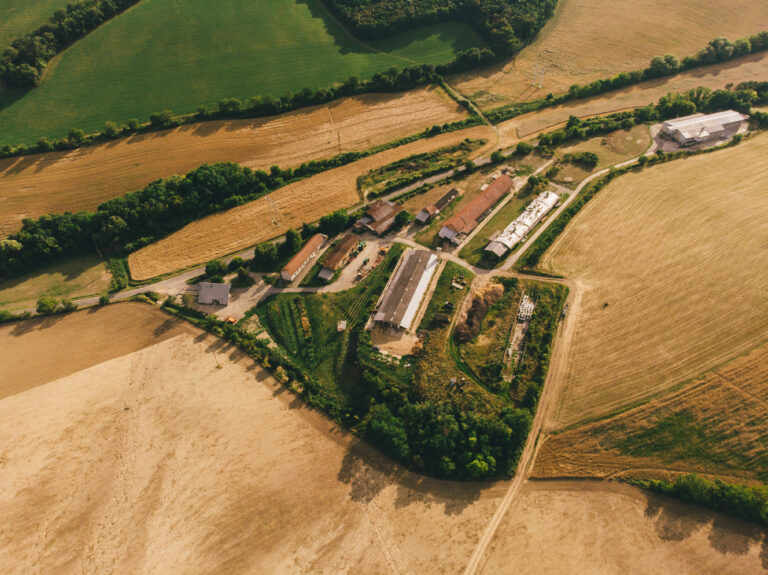
A Lighthouse Farm is a real working farm that serves as a practical learning and demonstration environment within ReFarm. Rather than testing Nature-Based Solutions under controlled or theoretical conditions, the Lighthouse Farms explore how they can be applied within the realities of everyday farming.
Each farm starts from a different point, with its own environmental conditions, production system, resources and challenges. Using the ReFarm Decision Support System, these individual circumstances are analysed to identify suitable Nature-Based Solutions and develop a farm-specific implementation concept.
The farms then put selected measures into practice, monitor their development and share the experiences gained along the way. In this way, they act as living examples of climate-resilient farming, connecting research with practice and generating knowledge that can inspire and support other farmers, advisors and learners.
Meet the ReFarm Lighthouse Farms
Three farms, three different contexts and three individual pathways towards greater resilience. Located in Germany, Denmark and the Czech Republic, the ReFarm Lighthouse Farms differ in size, production systems, environmental conditions and the challenges they face.
Explore the farms to discover their individual characteristics, focus areas and the Nature-Based Solutions they are putting into practice.



A Closer Look at Our Lighthouse Farms
Each Lighthouse Farm brings its own conditions, challenges and opportunities to ReFarm. From an established organic farm adapting to drought and erosion to a highly diversified farm system and a new farm being designed with resilience in mind, they demonstrate how different pathways can lead towards more climate-resilient agriculture.
Take a closer look at the farms, the challenges they face and the individual areas ReFarm is exploring with them.
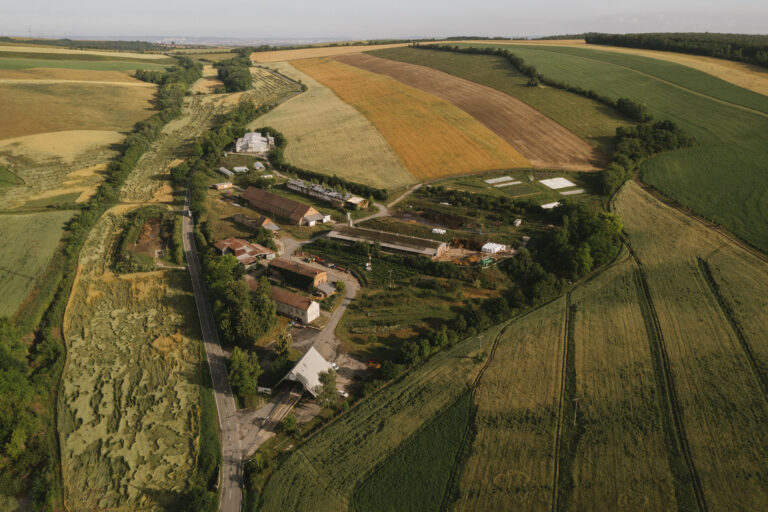

South Moravia, Czech Republic

410 ha

Organic farming

Arable crops & livestock

Dry region, 500–600 mm precipitation/year

Landscape resilience, soil & water
Agroforestry
An 8.78-hectare agroforestry system integrates trees and shrubs into arable land to improve microclimate, water retention and biodiversity.

Strip Cropping
Larger fields will be divided into functional crop strips to reduce erosion and runoff while increasing spatial diversity.
Keyline Design
Landscape planning based on terrain and natural water flows aims to improve infiltration and distribute water more effectively.
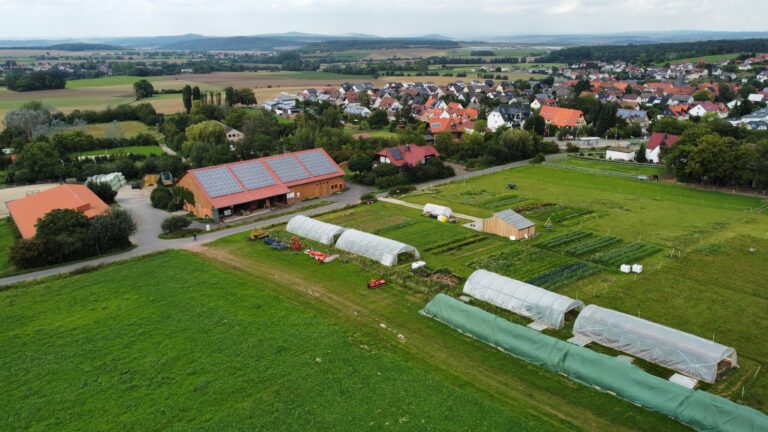
Calden-Fürstenwald, Germany
60 ha
Diversified mixed farming
Arable crops, cattle & market gardening
Low upland region, ~750 mm precipitation/year
Whole-farm resilience & diversification

Wind Protection
A multifunctional shelterbelt protects the market garden while supporting biodiversity and additional fruit production.
Biochar
Field trials will explore how biochar can improve soil structure, water retention and resilience to drought.
Rainwater Harvesting
Expanded rainwater storage aims to improve irrigation security and make better use of available rainfall.

Biodiversity & Agrotourism
New habitat and greening measures are linked with agrotourism as an innovative way of financing long-term ecological improvements.
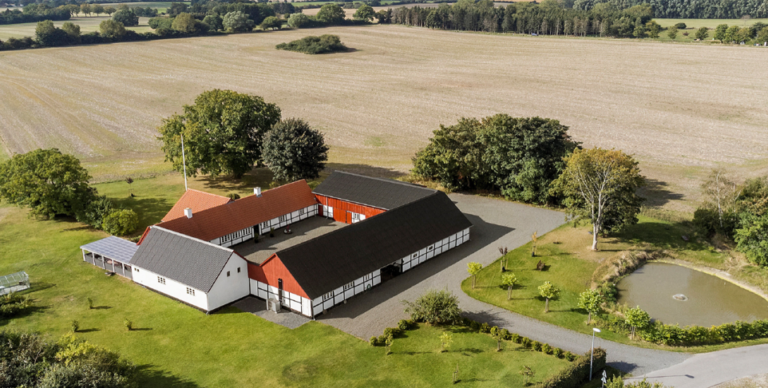
Near Køge, Denmark
22 ha
Developing mixed farm
Vegetables, agroforestry, forestry & livestock
Dry periods & heavy rainfall
Water management & landscape design
No-Dig Market Garden
A 150 m² no-dig market garden supports soil health, water retention and early farm revenue.
Rainwater Collection
Water tanks will collect rainwater from farm buildings for agricultural use, reducing water demand and improving resilience during dry periods.
Landscape Water Restoration
Historical maps and landscape analysis are being used to explore restoration of a former watercourse or the creation of a retention lake.